Ending the weekend with a singer I love (as you must already know,
don´t you?).
English sounds especially beautiful in Birdy´s voice.
Goodnight...
Having a conversation just using the Present Continuous is not so difficult.
Watch this video of some toddlers arguing about the weather. Was it raining or sprinkling (dwigawing) outside?
Men, never contradict women...
Watch this video of some toddlers arguing about the weather. Was it raining or sprinkling (dwigawing) outside?
Men, never contradict women...
Goodnight...
“Maybe its like you said before, all of us being cracked open. Like each of us starts out as a watertight vessel. And then things happen - these people leave us, or don’t love us, or don’t get us, or we don’t get them, and we lose and fail and hurt one another. And the vessel starts to crack in places. And I mean, yeah, once the vessel cracks open, the end becomes inevitable. But there is all this time between when the cracks start to open up and when we finally fall apart. And its only that time that we see one another, because we see out of ourselves through our cracks and into others through theirs. When did we see each other face to face? Not until you saw into my cracks and I saw into yours. Before that we were just looking at ideas of each other, like looking at your window shade, but never seeing inside. But once the vessel cracks, the light can get in. The light can get out.”
"Quizá es como dijiste antes. Todos estamos agrietados. Cada uno de nosotros empieza siendo un recipiente hermético. Y pasan cosas. Personas que nos dejan, o que no nos quieren, o que no nos entienden, o que no las entendemos, y nos perdemos, nos fallamos y nos hacemos daño. Y el recipiente empieza a agrietarse por algunos sitios. Y bueno, sí, en cuanto el recipiente se agrieta, el final es inevitable. Pero está todo ese tiempo desde que las grietas empiezan a abrirse hasta que por fin nos desmoronamos. Y sólo en ese tiempo podemos vernos unos a otros, porque vemos lo que hay afuera a través de nuestras grietas, y lo que hay adentro de ellos a través de las suyas. ¿Cuándo nos vimos tú y yo cara a cara? No hasta que tú viste a través de mis grietas y yo de las tuyas. Hasta ese momento sólo veíamos ideas el uno del otro, como mirar tu persiana, pero nunca ver lo que hay dentro. Pero cuando el recipiente se rompe, la luz puede entrar y la luz puede salir."
a: Where are you from?
b. I´m from Brazil.
a: What natiionality are you?
b: I´m Brazilian
a: Where were you born?
b: I was born in Brazil.
(Remember, you must write nations and nationalities with capital letters)
Here you have a long list of countries and nationalities. You needn´t learn all of them now, but you can have a look at them anytime you need extra information. Try to memorise as many nationalities as possible to improve your vocabulary.
| Country | Nationality | Language |
|---|---|---|
| Afghanistan | Afghan | Persian - Pashto |
| Argentina | Argentine / Argentinean | Spanish |
| Australia | Australian | English |
| Belgium | Belgian | French / Flemish |
| Bolivia | Bolivian | Spanish |
| Brazil | Brazilian | Portuguese |
| Cambodia | Cambodian | Cambodian |
| Cameroon | Cameroonian | French / English |
| Canada | Canadian | English / French |
| Chile | Chilean | Spanish |
| China | Chinese | Chinese |
| Colombia | Colombian | Spanish |
| Costa Rica | Costa Rican | Spanish |
| Cuba | Cuban | Spanish |
| Denmark | Danish (Dane) | Danish |
| Dominican Republic | Dominican | Spanish |
| Ecuador | Ecuadorian | Spanish |
| Egypt | Egyptian | Arabic |
| El Salvador | Salvadorian | Spanish |
| England | English | English |
| Estonia | Estonian | Estonian |
| Ethiopia | Ethiopian | Amharic |
| Finland | Finnish | Finnish |
| France | French | French |
| Germany | German | German |
| Ghana | Ghanaian | English |
| Greece | Greek | Greek |
| Guatemala | Guatemalan | Spanish |
| Haiti | Haitian | French / Creole |
| Honduras | Honduran | Spanish |
| Indonesia | Indonesian | Indonesian |
| Iran | Iranian | Persian |
| Ireland | Irish | Irish / English |
| Israel | Israeli | Hebrew |
| Italy | Italian | Italian |
| Japan | Japanese | Japanese |
| Jordan | Jordanian | Arabic |
| Kenya | Kenyan | Swahili |
| Korea | Korean | Korean |
| Laos | Laotian | Laotian |
| Latvia | Latvian | Latvian |
| Lithuania | Lithuanian | Lithuanian |
| Malaysia | Malaysian | Malay / Malaysian |
| Mexico | Mexican | Spanish |
| Morocco | Moroccan | Arabic / French |
| Netherlands | Dutch | Dutch |
| New Zealand | New Zealander | English / Maori |
| Nicaragua | Nicaraguan | Spanish |
| Norway | Norwegian | Norwegian |
| Panama | Panamanian | Spanish |
| Paraguay | Paraguayan | Spanish |
| Peru | Peruvian | Spanish |
| Philippines | Filipino | Tagalog / Filipino |
| Poland | Polish | Polish |
| Portugal | Portuguese | Portuguese |
| Puerto Rico | Puerto Rican | Spanish |
| Romania | Romanian | Romanian |
| Russia | Russian | Russian |
| Saudi Arabia | Saudi | Arabic |
| Spain | Spanish | Spanish |
| Sweden | Swedish | Swedish |
| Switzerland | Swiss | Swiss |
| Taiwan | Taiwanese | Chinese |
| Tajikistan | Tajik | Tajik (Persian) |
| Thailand | Thai | Thai |
| Turkey | Turkish | Turkish |
| Ukraine | Ukrainian | Ukrainian |
| United States | American * | English |
| Uruguay | Uruguayan | Spanish |
| Venezuela | Venezuelan | Spanish |
| Vietnam | Vietnamese | Vietnamese |
| Wales | Welsh | Welsh / English |
EX 1
These are countries where English is an official language. Match the numbers with the names of the countries and their nationalities.
EX 2
The Taj Mahal is a famous building in....
Uluru is a famous rock in...
The Statueof Liberty is a famous statue in...
The Cliffs of Moher are a wonderful place in...
Negril is a beautiful white beach in...
Waiting for your answers!!!
We use the Present Simple for...
- Facts and things that are always or generally true.
Water boils at 100º C
- Permanent situations
John works in a bank
- Habits, routines
Mary gets up at 7.00 every day
It usually appears with Adverbs of frequency
(always, often, usually, sometimes, rarely/hardly
ever, never)
These adverbs go before the verb and after auxiliary
verbs.
He never takes the train to work
He is never late for work
You can also find the Present Simple with expressions of frequency
(once a day, twice a week, every day, every
Tuesday...)
They appear at the end of the sentence,
I go to the cinema once a week
I visit my grandparents every weekend
The Present
Simple is also used after some conjuctions of time in a future sentences
(after, when, as
soon as, before until)
I´ll call you
when I arrive
PRESENT SIMPLE SPELLING CHANGES
Some verbs have present simple spelling changes with 'he', 'she' or 'it':
Add –s for most verbs
work - works, buy - buys, ride - rides
Add –es for words that end in –ch,
-s , -sh, -x, or –z.
watch - watches, pass - passes, rush - rushes, relax - relaxes, buzz - buzzes
Verbs that end in 'y' often change 'y' to 'ie' before 's'
- marry becomes marries
- cry becomes cries
(Be careful! 'y' doesn't change to 'ie' if the ending
is 'ay', 'ey', 'oy', 'uy'. So, play becomes plays, say becomes says, buy
becomes buys, enjoy becomes enjoys, stay becomes stays)
NOW PUT THESE VERBS INTO THE PRESENT SIMPLE TENSE:
1) She (play) tennis every Sunday.
|
2) He (buy) a cup of coffee
every morning.
|
3) Julie (study) French at
school.
|
4) Luke (try) hard to be
polite.
|
5)
She (enjoy) going
swimming.
|
6) Lucy (wash) her hair every day.
|
7)
John never (cry).
|
8) My mother always (say) that love is
more important than money.
|
9) I hope Julie (pass) the exam.
|
10) The plane (fly) low over the
airport.
|
It´s my birthday today, and I have a present for myself...listening to one of my favorite songs, Hotel California.
A birthday inevitably brings memories back to you. My school friends, my first parties, my first love, a short life at that time full of expectations about the future.
Eagles...
A birthday inevitably brings memories back to you. My school friends, my first parties, my first love, a short life at that time full of expectations about the future.
Eagles...
Time to go to bed after a long but happy day with my workmates in Valverde del Camino, Huelva.
Leave you in Birdy' s quiet company.
These aren´t good quality videos, but I made them myself last August...that´s why they´re so special. London sightseeing tour by open-topped double decker bus. What a cold night!! However, I wish I was there now..
Picadilly Circus...
and crossing Tower Bridge...
Because we all need our personal "wonderwall", something or somebody that gives us strength and makes us feel better.
A great song...
George Harrison composed the soundtrack of a film called "Wonderwall", where a man spied their neighbours next door looking through a hole in the wall and got involved in their lives. This album by Harrison, " Wonderwall Music", is supposed to be the inspiration for the title of this song by Oasis.
A great song...
George Harrison composed the soundtrack of a film called "Wonderwall", where a man spied their neighbours next door looking through a hole in the wall and got involved in their lives. This album by Harrison, " Wonderwall Music", is supposed to be the inspiration for the title of this song by Oasis.
Ahora que el curso va a empezar, ahora que los profes andamos preparando los primeros días de clase, permitidme una muy breve reflexión entre docentes.
Hace unos meses, en un curso de la editorial Edebé, nos propusieron la siguiente actividad. Un pequeño test. Un texto con cuatro preguntas de comprensión. En cinco minutos lo hicimos.
Resultado?
a) Todos sacamos un diez,
b) Ninguno entendimos una palabra de lo que decía el texto.
Reflexión:

Sacar buenas notas no siempre implica asimilación y aprendizaje. Tenemos que preparar para nuestros alumnos actividades que realmente nos demuestren al superarlas que han alcanzado los objetivos que deseamos. No consiste en mantener a los alumnos temerosos, desconcertados de qué o que no caerá en una prueba. Se trata de que sepan qué quieres de ellos, qué es realmente lo que necesitan aprender y darles la hoja de ruta, llena de experiencias y descubrimientos que habrán de hacer por ellos mismos.
Si para conseguir que a un profesor le respeten es necesario tener al alumnado preocupado y perdido entre dudas respecto a qué se está enfrentando o qué va a pasar mañana en clase...creo que nos hemos equivocado de profesión.
Si queréis hacer el texto, aquí está. Es divertido. Os llevará un par de minutos.
Plot ro yo pedrió en el Catón. Socré un ban cote. El graso estaba cantamente liniendo. No lo drinió. Una Para Jocia y un Pari Jocí estaban plinando en mi endidor. Estaban gribblando atamente. Yo grotí al Pari y a la Para fotnamente, No goffrienron un platión. Na el hini yo no putre licrerlo. Yo lindré vala. Possrí fobanamente.
PREGUNTAS:
¿Dónde pedrió el escritor Plot ro?
¿Quiénes estaban plinando?
¿Cómo gribblaban?
¿Goffrieron un plantión?
Vosotros también tenéis un diez, verdad? :)
A new era began with the Norman Conquest. William and his descendants introduced the feudal system and strengthened the rule of the King and the Church. During this period England conquered Ireland, Scotland an Wales, and held a lot of land in France. The most dramatic events in these years were:
1066: The Battle of Hastings.
1095: The first of the nine Crusades to the Holy Land. The final one was in 1271.
1170: The murder of Archbishop Thomas à Becket in Canterbury Cathedral as a result of a quarrel between the King and the Church.
1215: The Magna Carta: the English nobles forced King John to sign a document that limited his power and extended the rights of his subjects.
1337: Start of the Hundred Years War with France.
1348: Start of the terrible plague known as the Black Death.
1455: Start of the War of the Roses, a struggle for the throne of England between the House of York (white rose) and the House of Lancaster (red rose). It ended in 1485 when Henry Tudor became King Henry VII.
A Royal Castle
Windsor Castle was built by William the Conqueror in the 11th century. Since then it has been much altered and enlarged, but it has always been the main royal residence. It is the largest inhabited castle in the world and the oldest royal residence still in use.
A Heroic Outlaw
Perhaps the most famous British legend is the story of Robin Hood and his merry men. According to the legend, Robin Hood lived during the reign of King Richard the Lionheart at the end of the 12th century. Richard spent the most of his reign fighting abroad, in his lands in France and on the Crusades. While the King was away, England was ruled by his brother, John. Robin Hood was originally a nobleman and a supporter of Richard. But while the King was away John took Robin's lands and made him an outlaw. So Robin Hood went to live in Sherwood Forest where he collected his band of followers: Friar Tuck, Little John, Maid Marian, Will Scarlet, Alan à Dale, and the rest. He fought against John and the Sheriff of Nottingham. He robbed only those people who were rich and gave most of the money to the poor.
(EF Information Sheet)
1066: The Battle of Hastings.
1095: The first of the nine Crusades to the Holy Land. The final one was in 1271.
1170: The murder of Archbishop Thomas à Becket in Canterbury Cathedral as a result of a quarrel between the King and the Church.
1215: The Magna Carta: the English nobles forced King John to sign a document that limited his power and extended the rights of his subjects.
1337: Start of the Hundred Years War with France.
1348: Start of the terrible plague known as the Black Death.
1455: Start of the War of the Roses, a struggle for the throne of England between the House of York (white rose) and the House of Lancaster (red rose). It ended in 1485 when Henry Tudor became King Henry VII.
A Royal Castle
Windsor Castle was built by William the Conqueror in the 11th century. Since then it has been much altered and enlarged, but it has always been the main royal residence. It is the largest inhabited castle in the world and the oldest royal residence still in use.
A Heroic OutlawPerhaps the most famous British legend is the story of Robin Hood and his merry men. According to the legend, Robin Hood lived during the reign of King Richard the Lionheart at the end of the 12th century. Richard spent the most of his reign fighting abroad, in his lands in France and on the Crusades. While the King was away, England was ruled by his brother, John. Robin Hood was originally a nobleman and a supporter of Richard. But while the King was away John took Robin's lands and made him an outlaw. So Robin Hood went to live in Sherwood Forest where he collected his band of followers: Friar Tuck, Little John, Maid Marian, Will Scarlet, Alan à Dale, and the rest. He fought against John and the Sheriff of Nottingham. He robbed only those people who were rich and gave most of the money to the poor.
(EF Information Sheet)
No, "Every Breath You Take" is not a love song, but a song about stalking. Even Sting, who wrote this song for the band The Police in 1983 after his divorce, admitted that it is evil and sinister, a song about jealousy and ownership.
He was really disconcerted by how many people see this song as a positive one and misinterprete it. He says: "One couple told me 'Oh we love that song; it was the main song played at our wedding!' I thought, 'Well, good luck.'"
The ALS Ice Bucket Challenge (dumping a bucket of ice water on your head or donating some money to the ALS Association) has recently gone viral through social media. Celebrities do it and nominate other famous people who must do the same or make a donation in 24 hours.
Public awareness of this disease, amyotrophic lateral sclerosis (ALS),
has always been relatively limited, however this social media campaign was born to raise funds and spread awareness of this disease and , what is more important, HOPE.
Public awareness of this disease, amyotrophic lateral sclerosis (ALS),
has always been relatively limited, however this social media campaign was born to raise funds and spread awareness of this disease and , what is more important, HOPE.
I have to say that watching these videos of celebrities dumping buckets of freezing water over their heads is really entertaining, however few of the videos I´ve seen contain any substantive information about the disease, and many of them just try to show altruism or attractiveness in a wet T-shirt.
"Amyotrophic lateral sclerosis (ALS), often referred to as "Lou Gehrig's Disease," is a progressive neurodegenerative disease that affects nerve cells in the brain and the spinal cord. Motor neurons reach from the brain to the spinal cord and from the spinal cord to the muscles throughout the body. The progressive degeneration of the motor neurons in ALS eventually leads to their death. When the motor neurons die, the ability of the brain to initiate and control muscle movement is lost. With voluntary muscle action progressively affected, patients in the later stages of the disease may become totally paralyzed" (from http://www.alsa.org/about-als/what-is-als.html)
As I don´t like cold water very much, I have made my own economical donation to the ALS Association, (ES09 - 2038 - 1923 - 156200003135, Asunto: cubo helado) and encourage you to contribute to a good cause.
Soon after the Romans left, Britain was also attacked by Germanic tribes, mainly Angles and Saxons. At first they only raided but eventually they settled and colonised much of Britain. But the peace did not last. First the warlike vikings attacked from Denmark. They started their raids in the 8th Century and made their first full-scale invasion in 865. Indeed, Britain was even under Danish rule for a while, from 1016 to 1042. Then, the Anglo-Saxons had only just regained the throne when the Normans arrived under the Anglo-Saxons under King Harold at the Battle of Hastings in 1066, and so he became King William I of England.
A King out of Legend
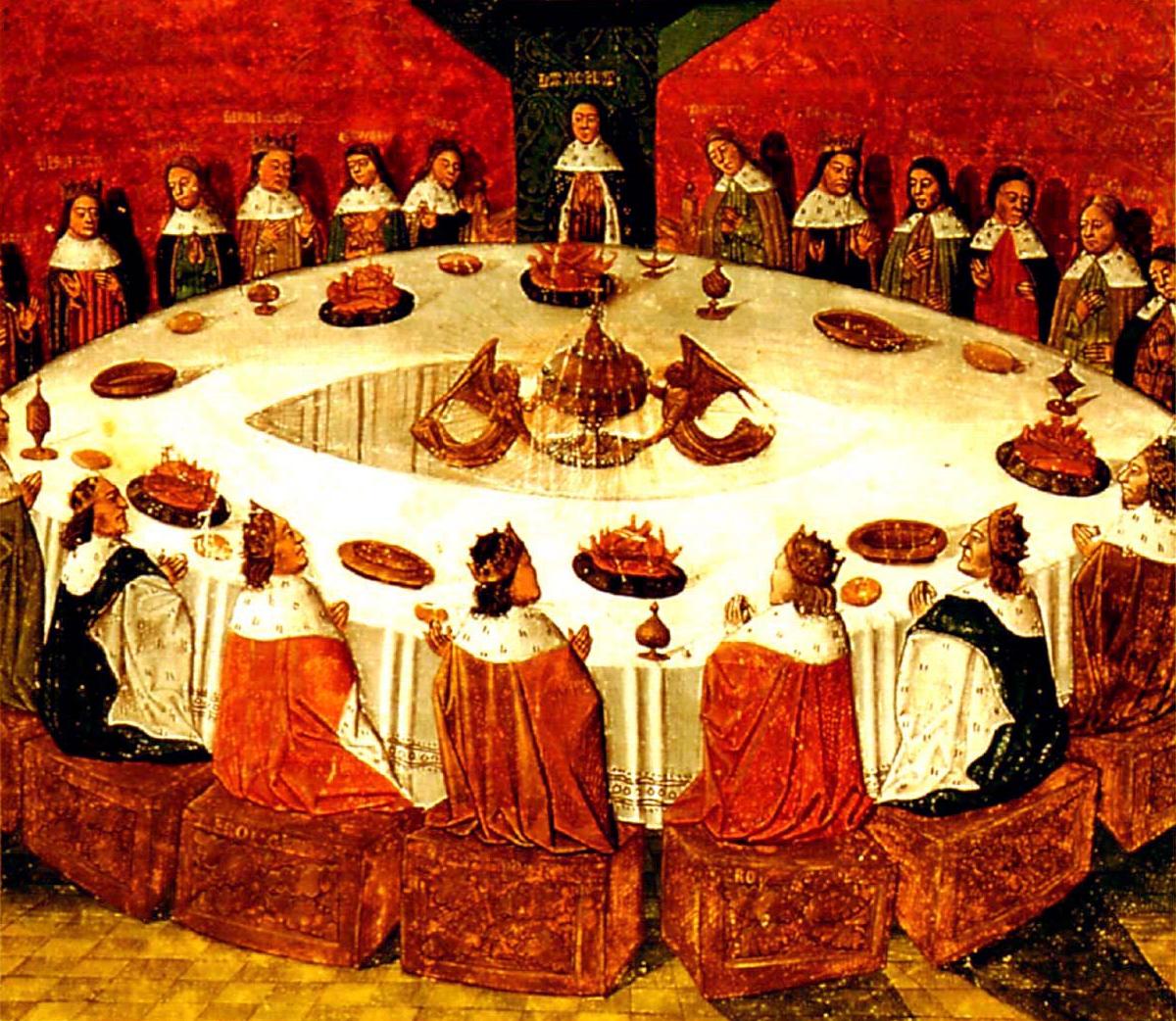
When the Romans left Britain, the land was unprotected against the invading Angles, Saxons and Jutes. They found conquest easy until a King called Arthur united the British and defeated the invaders in many battles. The result was that the Anglo-Saxon advance was halted for about 50 years. Little more than this is known about Arthur except for a powerful legend of magical powers. This legend later became the story of King Arthur and the Knights of the Round Table, a legend full of medieval chivalry and Christian symbols but also some of the earlier magic. But the story does not belong only to Britain; medieval French and German poets also wrote about King Arthur and his Knights of the Round Table. A Naked Lady
One of the most colourful stories to come out of Saxon England is that of Lady Godiva. She lived in the 11th century and was the wife of Earl Leofric. According to the legend, when her husband demanded high taxes from the people of Coventry, she took their side. Her husband then dared her to ride naked through the streets of Conventry, promising her to lower the taxes if she did so. She agreed. When she rode naked through the town, all the grateful people of Conventry stayed indoors with their windows shut — all, that is, except a certain tailor called Tom who peeped through his window and was struck blind for daring to look. He became known as "Peeping Tom", which is now an expression in the English language.
The recorder history of Britain began in 55 B.C, when the first Romans arrived under Julius Caesar. They made a full invasion about 100 years later and they stayed in Britain for over 350 years. The romans were great builders and Britain has many Roman remains, such as roads, villas, public baths, and fortifications. In about 400 A.D the Romans were forced to leave Britain and return to Rome, to defend it against the attacks of the Germanic tribes.
A Great Wall
The most impressive of the Roman remains is a wall, built right across the north of England. In the second century A.D the Emperor Hadrian built this wall as the most northern frontier of the Roman Empire. It was very heavily fortified with a small fort every mile and larger forts as well. Its purpose was to protect Roman Britain against the warlike tribes that lived north of the wall, in what is now Scotland.
(EF Information Sheet)
A Great Wall
The most impressive of the Roman remains is a wall, built right across the north of England. In the second century A.D the Emperor Hadrian built this wall as the most northern frontier of the Roman Empire. It was very heavily fortified with a small fort every mile and larger forts as well. Its purpose was to protect Roman Britain against the warlike tribes that lived north of the wall, in what is now Scotland. (EF Information Sheet)
Welcome to my blog!
I have created this blog especially for those who need English and also for those who love it. I hope you find this site useful.
If you have any suggestions, ideas, requests or just want to leave a message, please send me an email (cmsanchezh@gmail.com) or fill in this contact form.
Contact form
Popular Posts
-
Describing a picture is part of your Cambridge English Preliminary. Don´t panic, take your time and organise your ideas. Here you have ...
-
Learning how to use gerunds and infinitives after a verb can be difficult in English, I know, but don´t panic. Let´s put our ideas in or...
-
Cuando una persona desea comunicar lo que otra ha dicho, dispone de dos posibilidades: repetir las palabras textuales (Estilo ...
-
La voz pasiva se suele utilizar cuando se considera más importante una acción que quien la realiza. Se utiliza además cuando se descon...
-
WRITE THE VERBS IN THE CORRECT PASSIVE TENSES. 1. My flat (sell) last week. 2. The room (not paint) yet. 3. I think the results ...
-
Saint Patrick's Day is a yearly holiday celebrated on 17 March. It is a public holiday on the island of Ireland, including N...
-
Do you know who Saint Valentine was? Why do we celebrate on February 14? Read his "autobiography" and find out why every...
-
Saint Valentine is coming!! =D. Here are some tips and ideas to help you give a perfect Valentine's Day Card to your beloved: B...
-
T he refresher course I´ve taken these days has provided me, as an English teacher, not only the opportunity to up-date my English and ...

Labels Cloud
1 ESO
3 ESO
4 ESO
About my country
adjectives
Art
Article
B1
Biographies
Books
British History
Causative
Collocations
Common mistakes
Comparatives and Superlatives
Conditionals
Connectors
Craft
Culture
Current affairs
Daily Situations
Descriptions
Educational Information
English is fun
Environment
Exercises
False Friends
Films
Future Tenses
Games
Geography
Gerund and Infinitive
Idioms
Imperative
Interesting Places
Interjections
Irregular Verbs
Job
Listening
Make vs DO
Mathematics
Mind maps
Miscellany
Modal Verbs
Paraphrasing
Passive
Past Continuous
Past Perfect
Past Simple
Past Simple/Present Perfect
Personal Information
Phonetics
Phrasal V erbs
Phrasal Verbs
Poetry
Prepositions
Present Continuous
Present Perfect
Present Simple
Projects
Pronunciation
Quantifiers
Question Tags
Quiz
Quotes and proverbs
Reading
Recipes
Reinforcement Activities
Relative Clauses
Rephrasing
Reported Speech
Saxon Genitive
Series
So/Such
Songs
Speaking
Spelling
Sport
Subject and Object Questions
Tense Revision
Time Expressions
Used to
Vocabulary
Writing
Blog Archive
Followers
Visitors
Geocounter
I am an Edublogger!